From Toscolano to Vienna: Production and Transalpine Trade of Venetian Music Paper
DOI:
https://doi.org/10.71045/musau.2026.SI1.31Keywords:
Eighteenth century, Music Manuscripts, Music Paper, Watermarks, Paper makers, Staff ruling, Venice, ViennaAbstract
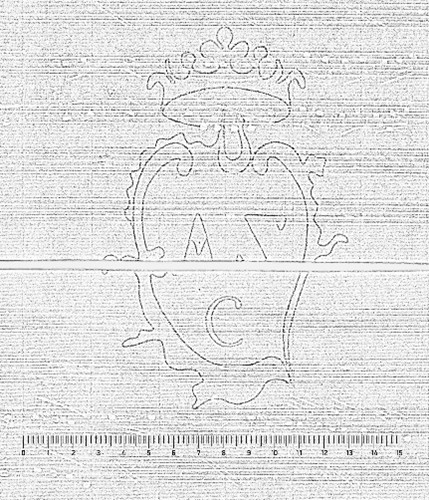
Most of the paper used for Viennese opera scores in the 1760s and 1770s originated from the region around the Toscolano River near Lake Garda, one of Italy’s most significant centers of paper production. Cadastral records and notarial documents provide insights into the conditions of production, the location of the mills, and the extensive, interwoven networks of papermaking families. Some of these, including the Calcinardi, Fondrieschi, Zuanelli, Fossati, and Seguito families, dominated the market. Each had its own distinctive watermarks, often featuring similar motifs as a form of branding.
The large number of surviving scores from this period offers valuable information about the production cycle of paper. Every two to three years, as the moulds wore out and had to be replaced, new paper with updated watermarks entered the market.
Before reaching Vienna, blank paper from the Valle delle Cartiere (“Valley of the Paper Mills”) was likely transformed into music paper in Venice, where specialized rigatori added staff lines. These craftsmen used special ruling devices that enabled them to draw all lines on a sheet simultaneously. An analysis of staff ruling patterns indicates a rising demand in the 1770s, prompting rigatori to employ multiple ruling devices at once to increase output.
The transport of Venetian music paper to Vienna was rarely handled by specialized paper merchants. By the late eighteenth century, paper was often imported alongside other goods. As a result, not only music publishers and booksellers but also Viennese merchants dealing in a broad range of imported wares made Venetian music paper available to composers and copyists.