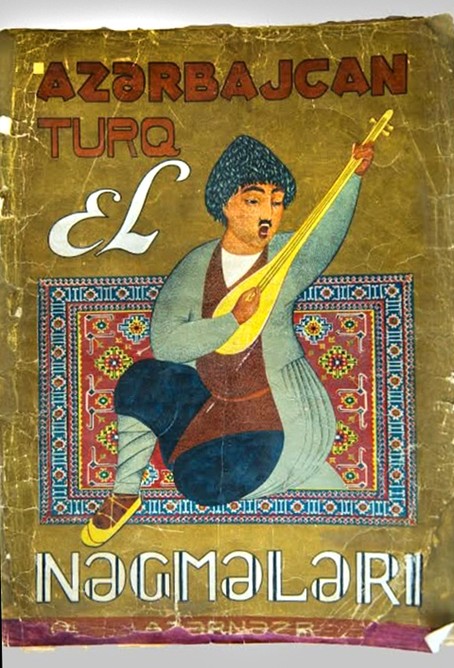
Fret by Fret
The Saz/Qopuz and Sociopolitical Change in Azerbaijan-Turkish Ashiq Art
DOI:
https://doi.org/10.71045/musau.2026.1.54Keywords:
Ashiq art, saz (qopuz), mugham, fret arrangement, Azerbaijan-Turkish music, revival, Soviet cultural policy, musical instrumentsAbstract
This article examines the historical transformation of the saz/qopuz—the central instrument of Azerbaijan-Turkish Ashiq art—and analyzes how sociopolitical and cultural changes between the 1930s and 1980s reshaped Ashiq performance practices, whose legacies survive in contemporary performances. Focusing comparatively on Soviet Azerbaijan and Iranian Azerbaijan, it shows how the institutionalization and canonization of mugham under Soviet cultural policy reconfigured the musical hierarchies and marginalized Ashiq art; a shift that was materially registered in the expansion of the saz’s fret layout. Using archival research and ethnomusicological fieldwork, the article reconstructs the early six-fret configuration of the saz. It also traces subsequent fret additions that occurred earlier in Soviet Azerbaijan and later in Iranian Azerbaijan, arguing that the structural limitations of this layout in realizing key components of the canonized mugham modal system placed new pressures on this gradual expansion process. Through the lens of revival theory, the analysis demonstrates how Ashiq art—once deeply embedded within ritual and narrative traditions—shifted toward a concertized, music-centerd performance form, which was mirrored in the progressive addition of frets to the saz. The findings underline how state-initiated cultural policies reshaped not only Ashiq performance forms but also the physical design of its central instrument.