Opera across the Alps:
Habsburg Vienna and Transalpine Networks in Claudio Vellutini’s Entangled Histories
DOI:
https://doi.org/10.71045/musau.2026.1.58Keywords:
nineteenth century, Habsburg Empire, Italian Opera, Opera studies, ViennaAbstract
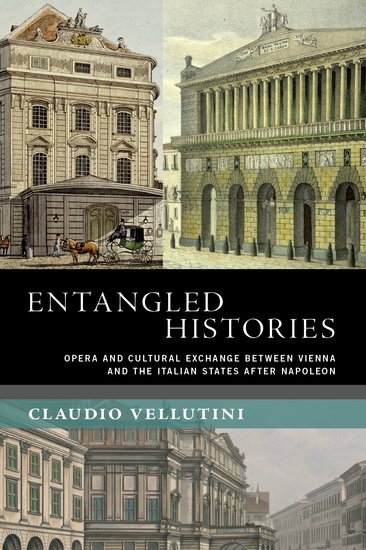
This review article examines Claudio Vellutini’s monograph Entangled Histories: Opera and Cultural Exchange between Vienna and the Italian States after Napoleon (Oxford University Press, 2025), which investigates the intersection of opera and Habsburg cultural politics in nineteenth-century Vienna and Italy. Moving beyond traditional nationalist frameworks and the “Paris-centric” view of nineteenth-century music, the study positions Vienna as the centre of a dense transalpine network of operatic circulation. Vellutini highlights how the Habsburg Empire utilised operatic performances to consolidate a supranational imperial identity and a shared imperial community in the aftermath of the Napoleonic Wars and the establishment of the Austrian Empire. Central to this narrative is the role of impresarios—such as Domenico Barbaja, Bartolomeo Merelli, and Carlo Balocchino—whose business strategies aligned with Austrian cultural policy to facilitate a steady exchange of artists and repertoire across the Alps, thereby bridging Italian and German artistic traditions.
The review expands on Vellutini’s research through a case study of the tenor Antonio Poggi (1806–1875). It demonstrates how Poggi’s artistic identity was not merely exported from Italy but was forged and consolidated in Vienna, eventually projecting his fame back onto the Italian operatic market. Ultimately, the article highlights how Vellutini’s “entangled” approach reconfigures the geography of nineteenth-century opera, presenting Italian opera as a cosmopolitan cultural project actively promoted by the Habsburg administration.