Sacred Music Entangled
The Constance Hymnal (1540)
DOI:
https://doi.org/10.71045/musau.2026.1.63Keywords:
entanglement, histoire croisée, Konstanzer Gesangbuch, early modern hymnbooks, print circulation, Reformation music, sacred musicAbstract
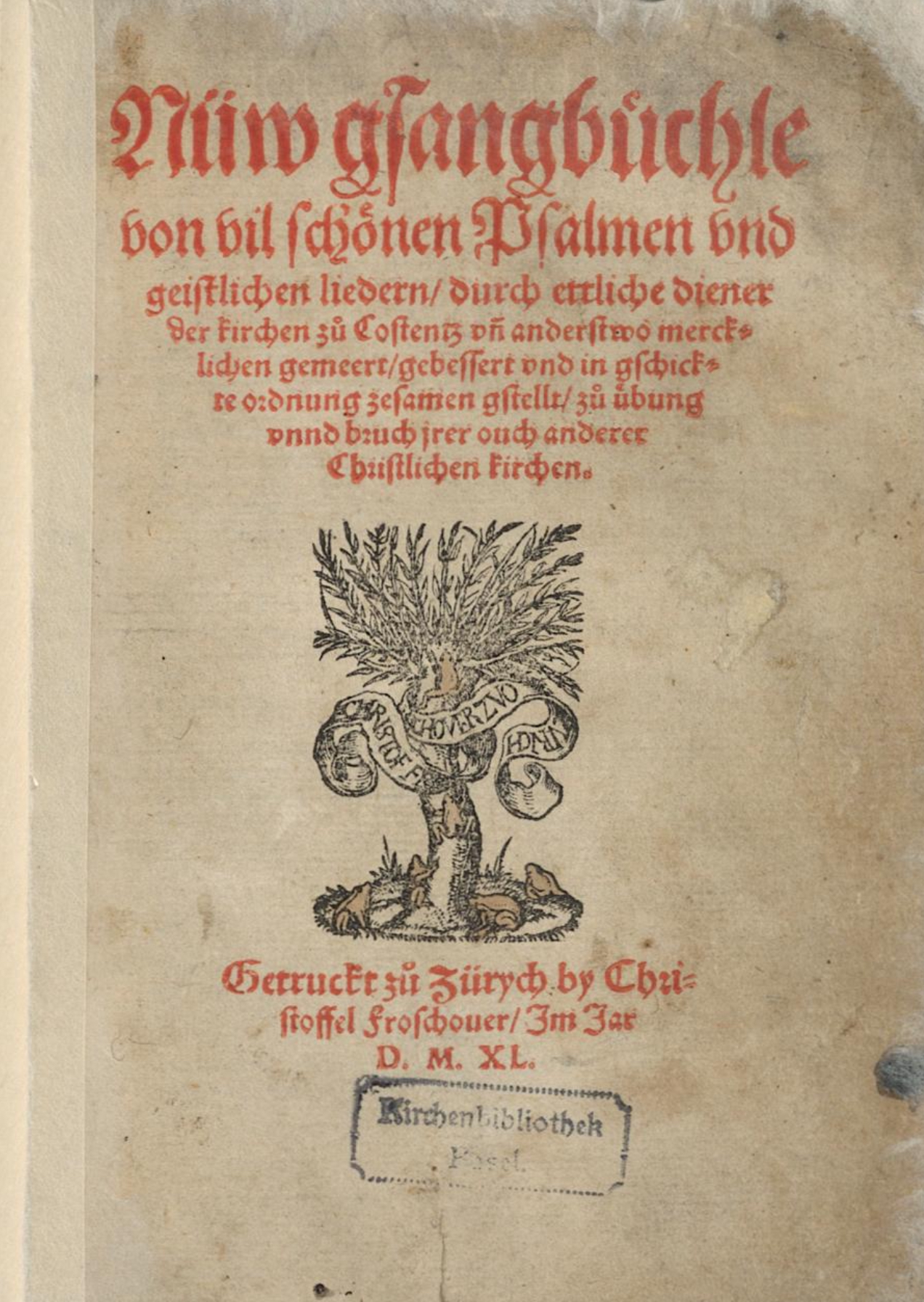
Focusing on the Constance hymnal (Konstanzer Gesangbuch, 1540), this article highlights early modern sacred song as a relational practice. Methodologically, the study employs histoire croisée to analyze the hymnal’s multi-layered character and to trace entanglement, asymmetry, and mediation in its making, contents, and reception. The analysis reveals that the Constance hymnal embodies asymmetric collaboration across civic, clerical, and regional contexts. Its paratexts articulate shared editorship and interurban coordination, its repertory connects chant tradition with evangelical pedagogy, distinct notational regimes mediate between inherited and Reformed singing practices, and text-only contrafacta link print culture to oral transmission and tune memory. A sustained sequence of revisions, expansions, and reprints demonstrates how continuity is maintained through alteration. Traces of circulation and use documented through mapping show strong reception in Zurich and Bern, dense circulation across Graubünden and the Upper Rhine, and Catholic monastic preservation reaching into Austria. The hymnal was used in multiple settings, from congregational worship to household devotion and the instruction of children. Taken together, these findings reframe sacred song as an entangled practice and establish histoire croisée as a useful method for the study of early modern sacred music.